


Litontour Festival Education and Outreach
Litontour brings contemporary authors into Ontario classrooms and communities to strengthen reading, writing, and civic conversation through sustained, curriculum-linked encounters rather than one-off publicity events. Its core practice pairs author expertise with teacher-led learning to boost motivation, literacy skills, and community belonging.
Evolution of Literary Festivals

Public readings and salon culture from the 18th and 19th centuries established practices of shared listening, critical response, and social debate that later migrated into North American civic life through lyceums and community lecture series. By the late 20th century cities such as Toronto saw the emergence of large-scale author festivals that combined local programming with international guests, creating infrastructures for touring and outreach that reach beyond urban centres. Audiences now expect participatory formats, digitally mediated access, and programs with explicit educational value. That shift reframes festivals as year-round learning partners rather than occasional cultural attractions, prompting organizations like Litontour to prioritize sustained school engagement, teacher collaboration, and measurable learning outcomes.
Educational Philosophies and Programming
Informal learning, lifelong literacy, experiential practice, and place-based education are central to effective festival education. Programs positioned as extensions of classroom practice yield stronger uptake when they respect curricular goals and local contexts, including Indigenous knowledge systems and multilingual realities across Ontario. Below is a practical matrix of common program models, target ages, formats, intended learning outcomes, and accessibility features offered by successful provincial touring programs.
| Program model | Format and typical length | Target age range | Core learning outcomes | Accessibility and inclusion features |
|---|---|---|---|---|
| Classroom author visit | 45–75 minute in-class session plus Q&A | K–12 | Motivation to read, listening strategies, modelled revision techniques | Captioned slides, large-print takeaway materials, ASL/CART on request |
| Youth mentorships and residencies | 6–12 week mentorships, mixed in-person and online | Grades 7–12 | Sustained creative practice, portfolio development, publication pathways | Scholarships, travel bursaries, Indigenous-language mentorship options |
| Workshops and performances | 60–120 minute interactive workshop or staged reading | Early years to secondary | Phonological awareness (early years), narrative structure, voice work | Sensory-friendly performances, simplified materials for newcomers |
| Virtual author series | 30–60 minute livestream with follow-up lesson packs | K–12 and postsecondary | Access to authors across distance, modelling research and inquiry | Recorded sessions, subtitled videos, low-bandwidth options |
| School residencies with community outcomes | Multi-day projects culminating in public sharing | All ages | Place-based storytelling, civic literacy, cross-age mentoring | Community translators, partnership with local cultural centres |
Programs that combine synchronous encounters and durable resources for teachers produce the strongest classroom transfer. Age-appropriate activities emphasize performance and read-alouds for early grades, scaffolded craft instruction for middle years, and publication or public-facing projects for older students.
Partnerships, Professional Development, and Learning Outcomes
Effective partnerships pair festival staff with classroom teachers, school boards, public libraries, museums, and postsecondary research centres to co-design learning sequences that map to provincial curriculum expectations. Collaborations with university education faculties and literacy researchers create evidence-informed workshops and enable program evaluation. Professional learning opportunities strengthen teacher capacity to embed author visits into sequenced learning. These may include pedagogical workshops, resource packs linked to the Ontario curriculum, and accredited continuing education offerings recognized by provincial teacher bodies.
Festival education fosters a range of skills: foundational literacy and comprehension, advanced critical reading, and creative writing craft. It also supports cultural literacy and civic engagement by foregrounding diverse voices and community narratives. Peer learning and teacher networks created through festival events promote practice-sharing that multiplies impact across schools.
Inclusion, Digital Access, Research, and Funding

Removing financial and logistical barriers is essential for equitable participation. Common strategies include subsidized bus grants, free virtual options for remote communities, sliding-scale fees, and scholarships for mentorship programs. Programming adapted for Indigenous, multilingual, and marginalized communities prioritizes community leadership, use of local languages such as Anishinaabemowin and Cree where appropriate, and culturally responsive content co-created with knowledge holders. Accessibility practices include live captioning, tactile or audio-described presentations, and materials formatted for low-vision learners.
Digital and hybrid models extend reach to remote and northern classrooms and create asynchronous archives teachers can reuse. Evaluation strategies combine pre/post surveys, classroom observation, and qualitative interviews with students and teachers to capture changes in motivation and reading habits. Comparative case examples from provincial touring initiatives point to short-term gains in reading engagement and teacher confidence; longitudinal study designs are increasingly being adopted to follow academic and civic outcomes over multiple years.
Funding typically blends government arts grants, philanthropic support, municipal contributions, and corporate sponsorship, together with revenue from ticketing and fee-for-service school programs. Sustainability planning addresses both environmental impact of touring and the financial viability of subsidized school access through multi-year commitments and diversified revenue.
Best Practices, Challenges, and Future Directions
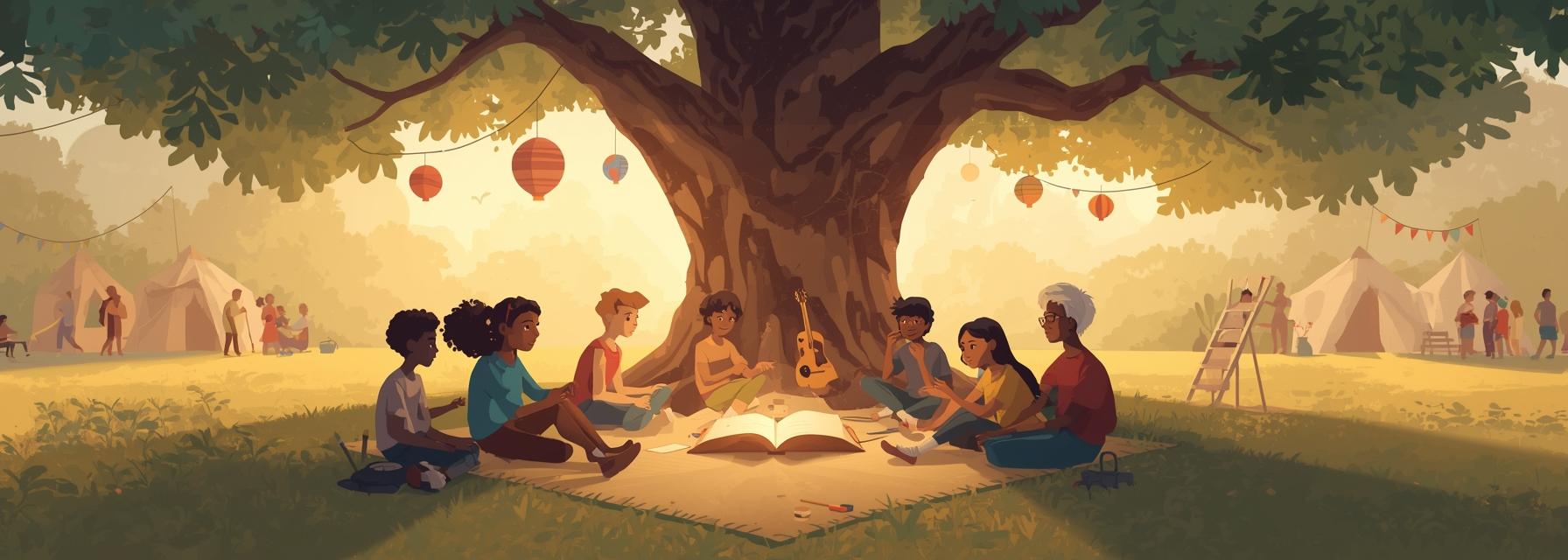
Best practices center on co-creation with students, teachers, and local stakeholders; inclusive scheduling that accommodates school calendars and community rhythms; and rigorous evaluation cycles that inform ongoing refinement. Persistent challenges include pressures to commercialize programming, tokenistic representation, and the need to balance entertaining formats with pedagogical depth. Ethical practice calls for meaningful inclusion of marginalized creators and attention to compensation, authorship rights, and culturally safe processes.
Innovation on the horizon includes cross-disciplinary projects that integrate narrative with science and technology, interactive storytelling with augmented reality, and expanded digital platforms that support year-round learning communities. Building resilient literary learning ecosystems means embedding festival activity into school planning, library services, and community arts strategies so that author encounters become part of sustained literacy pathways rather than isolated events.